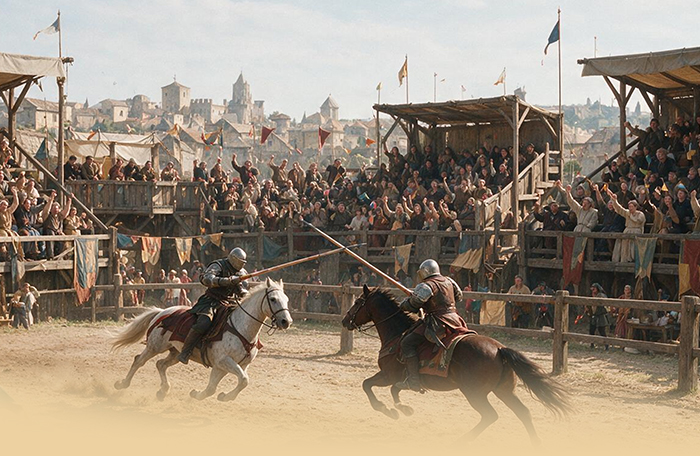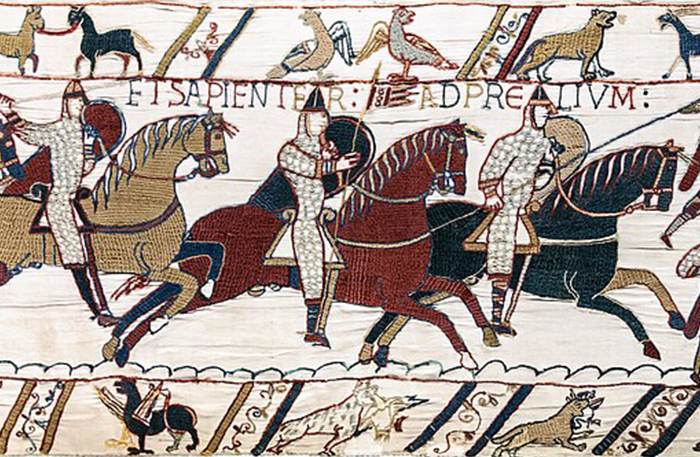

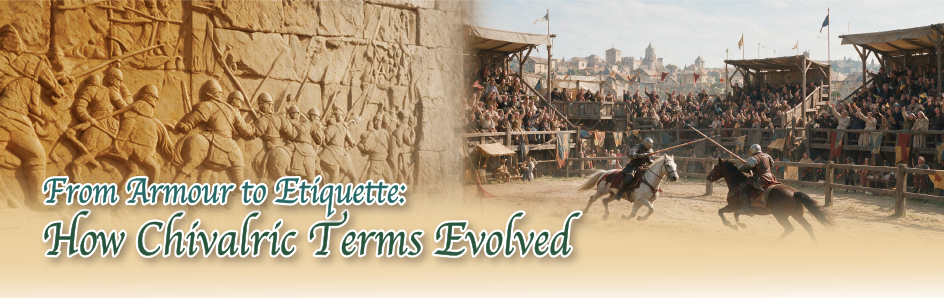
Few would argue that Medieval Europe was forged in blood and iron. From blood-soaked battlefields and clanking steel emerged a vocabulary steeped in warfare: chivalry, cavalier and knight. Once tied to the saddle and the spear, these terms have slipped into our everyday speech to describe behaviour, attitude, and even fine dining.
Chivalry is one of those words. Coming into Middle English from Old French as chevalerie, the word originally referred to armoured mounted warriors or knights serving an overlord. The word traces back further still, to the Late Latin caballārius which means “horseback riders”. Later blending the virtues of feudal warriors with medieval Christian values, the word became a moral code of behaviour expected of perfect knights. Today, “chivalry” becomes shorthand for gentlemanly behaviour manifested through courage, honesty, loyalty, prowess and sportsmanship.
Stemming from the same Latin root caballārius, cavaliers initially referred to trained knights defined by their horsemanship. Only later did the label shift to describe swashbuckling royalist followers of Charles I during the English Civil Wars (1642-51). Over time, the word acquired its flippant sense, and is now used to describe those who fail to show proper care for serious matters, an attitude far removed from the mounted troopers in days of yore.
A knight, now a title of honour bestowed for exceptional achievements in the British honours system, originally meant a lowly servant. By the Middle Ages, however, the word referred to formally professed cavalrymen. The 13th-century Catalan philosopher Ramon Llull wrote in The Book of the Order of Chivalry that knights were those “best able to serve man”. Yet, despite this high-minded philosophy, being a knight back then was by no means a romantic calling; it was a gruelling and expensive profession. Equipping a single man-at-arms required a staggering financial investment to acquire the necessary armour, weaponry and warhorses. This muddy reality stands in stark contrast to the modern idiom a knight in shining armour, which has evolved to mean someone who selflessly rescues another from a difficult or dangerous situation.
Interestingly, chivalric history also seasons our dining culture, most notably through the phrase Le Cordon Bleu (“blue ribbon”). This culinary badge of honour traces its root back to 1578, when French King Henry III established the most senior order of knighthood, L’Ordre du Saint-Esprit. These prestigious blue-ribboned knights were rumoured to indulge in extravagant feasts, forever tying the phrase Cordon Bleu to culinary excellence.
Whether invoking chivalry or describing a cavalier attitude, we are speaking the very language of medieval knights. Though stripped of their armour, these terms endure as a testimony to how language evolves to reflect our changing lives and cultures.