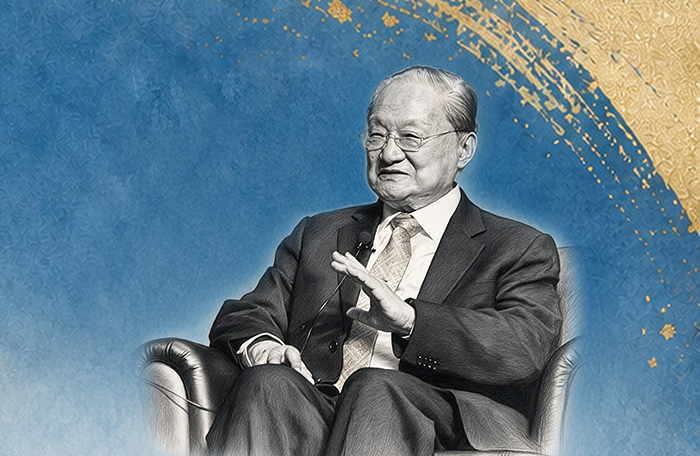

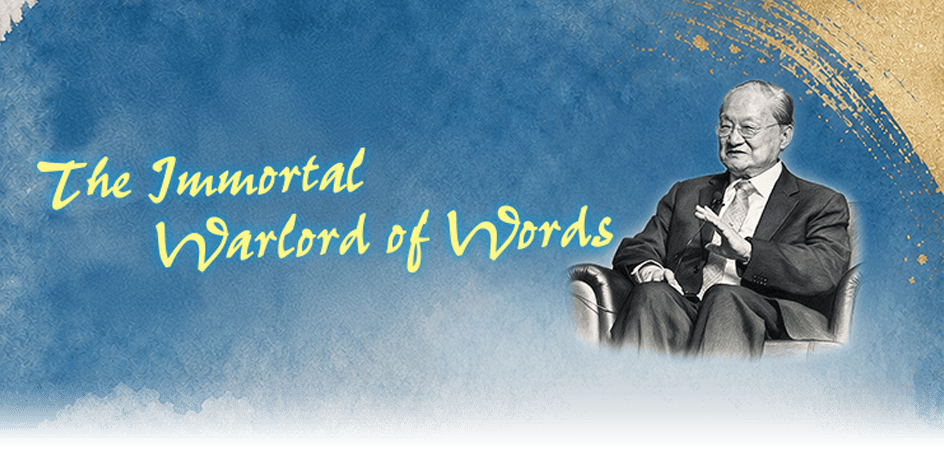
It is a saying that proves to be true: in places where there are Chinese communities, you can almost always find Jin Yong’s novels. Louis Cha, better known by his pen name Jin Yong, was the most widely read Chinese writer of the latter half of the twentieth century, with over 300 million copies of his books sold worldwide. Revered as a literary legend and China’s cultural icon, the juggernaut produced innumerable timeless masterpieces which still shine and remain impossible to put down.
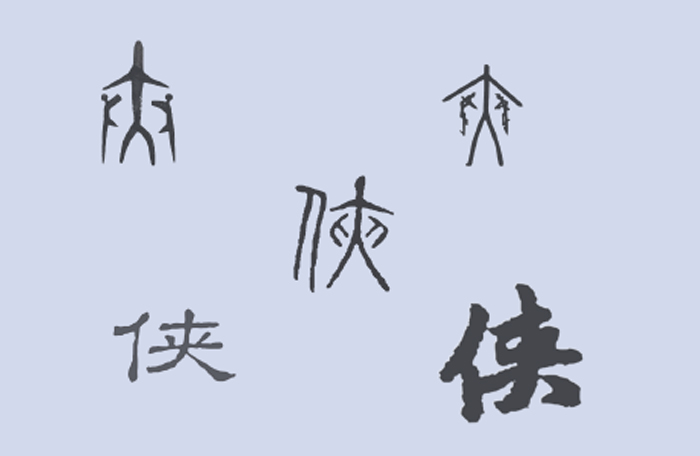
Born to a wealthy landlord’s family in Haining, Zhejiang Province in 1924, Cha worked as a journalist and translator for the newspaper Ta Kung Pao in Shanghai until 1948 when he transferred to its Hong Kong office. A couple of years later, he ventured into wuxia, a cultural classic of Chinese literature featuring heroic martial artists’ swashbuckling adventures that have mesmerised generations of readers.
While working as an editor at the now defunct New Evening Post, Cha published his first wuxia novel, The Book and the Sword, as a newspaper serial in 1955. It landed instantly. Since then, his page-turners have kept readers of all ages burning the midnight oil, devouring stories of patriotic heroes banding together to overthrow the Manchu Court, and of star-crossed lovers struggling, against all odds, to stay together.
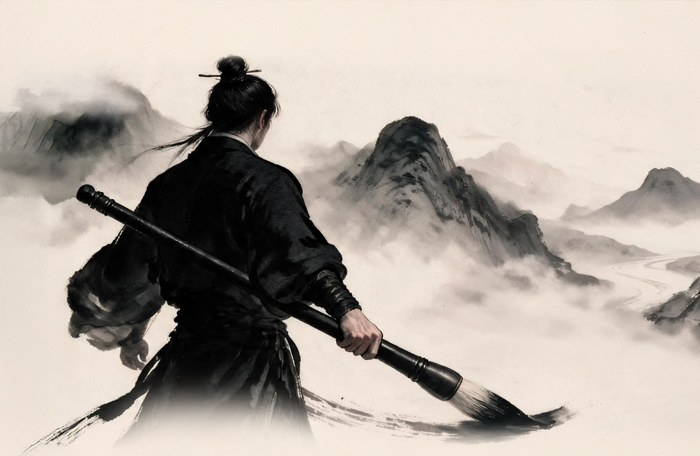
His dramas unfolded against the backdrop of the Jianghu. Meaning “rivers and lakes”, this legendary martial arts underworld was a realm where fictional heroes, villains, and outcasts roamed. Cha wove his stories into a rich tapestry of fantasy, history and folklore, captivating readers’ imagination about ancient China. The plot of The Book and the Sword, for instance, was inspired by a long-held legend in his home town that the Manchu emperor Qianlong was ethnically Chinese who had been swapped at birth.
The wuxia genre did not begin with Cha. It goes back to the Han dynasty, when historian Sima Qian wrote biographies of knights-errant and assassins in his Records of the Grand Historian. While wuxia had long been treated as a marginal genre in Chinese literary culture, Cha used it as a vehicle to express his profound love for Chinese history, culture and philosophical traditions—Confucianism, Buddhism and Taoism. In doing so, he transformed the popular form to fine literature. Since the 1980s, his corpus has sparked a dedicated field of literary study known as Jinology.
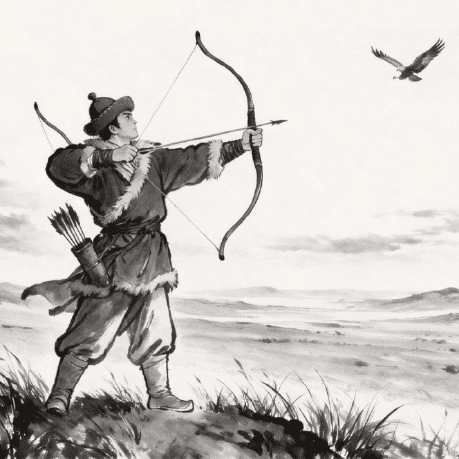
Cha’s heroes, depicted in tales of love, loyalty and chivalry, are not flawless. They are emotionally complicated, which captures readers’ hearts and minds. Consider Guo Jing, the hero in The Legend of the Condor Heroes. The simpleton spends his early years practising martial arts with the Seven Freaks of Jiangnan, an eccentric circle of martial artists to whom he pledges an unbreakable allegiance. He even learns breathwork from Ma Yu, a wandering Taoist priest, after swearing to secrecy. Simple but decent, Guo finds himself caught in a painful tug-of-war between loyalty to the Seven Freaks on one side and moral duty to honour Ma’s trust on the other. The story reaches its climax when Guo, handpicked by Genghis Khan as the betrothed of his favourite daughter, Princess Huazheng, becomes vehemently opposed to the Mongol military aggression against the Song dynasty. He is torn between filial piety towards the Mongol ruler and patriotic love for his homeland. Added to a blend of historical imagination and storytelling verve, such emotional torment is what makes Cha’s novels a compelling read.
Building upon the roaring success of The Legend of the Condor Heroes, Cha co-founded Ming Pao Daily News in 1959. To keep the new venture afloat, he wrote and published serialised wuxia stories every day, while also penning daily editorials on current affairs at prodigious speed. By the 1970s, Cha had become both a leading figure in wuxia fiction and a renowned journalist. His novels were translated into different languages, reaching readers first in the Chinese-speaking world and then far beyond, until adaptations began to appear everywhere, giving birth to a thriving business of film, television, comics and even video games.
Cha reached the zenith of his career in the early 1990s when he floated his publishing enterprise and not long after sold his stakes, easily becoming the most popular and wealthiest Chinese writer of his time. He lived to 94 in 2018, leaving behind a cherished collection of literary masterpieces and a wealth of nostalgic memories for those who grew up reading his works.
The novelist may have left the stage, but his mythical Jianghu endures. It continues to inspire cultural imagination and shape identity among the Chinese diaspora, while offering a window onto the splendour of an erstwhile era that may have otherwise faded into oblivion.