| |
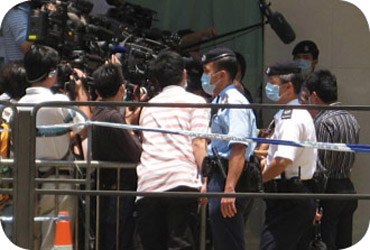 |
| Dealing tactfully with the media. |
Emergency
It was late afternoon on May 1, 2009 when the Department of Health (DH) requested Hong Kong Police Force’s assistance to cordon off the Metropark Hotel Wanchai, since a Mexican male residing at the hotel had tested positive for the novel H1N1 virus.
Our major responsibilities, at the initial stage, were to cordon off the hotel, not allowing any hotel guests or staff to leave, and to escort returning hotel guests and staff into the hotel for medical screening. In addition, we were also engaged in the management of media, crowds and traffic outside the hotel.
Very soon, as anticipated, many hotel guests became emotional about their being subject to a Quarantine Order and their ‘loss of freedom’. Under the circumstances, DH further requested us to remain inside the hotel for manning access control as well as maintaining law and order.
Health concern
Naturally, some of us were concerned about the possibility of being infected with the virus and passing it on to our family members, which was what happened to some medical staff at hospitals during the SARS outbreak.
This was particularly relevant for those whose duties entailed managing and, when absolutely necessary, controlling emotional persons inside the hotel – people who might develop symptoms of the virus.
Fortunately, we were well stocked with personal protective equipment that gave us a reasonably high level of protection. Even so, the key role played by our colleagues responsible for the provision of logistics support, such as the provision of refreshments and meal boxes starting from the first night and throughout the rest of the days, should not be underestimated.
Crowd management
In addition to those inside the hotel, we also had to handle the journalists and others stationed round-the-clock outside the hotel. These different groups were there for different purposes and required tactful handling, not because of any special status but because of their legitimate reasons for being there.
Some hotel guests were distressed, and some were angry about their ‘loss of freedom’ during their supposed ‘leisure/business trip’ to Hong Kong. We understood and sympathised. They were not trouble-makers, just unlucky.
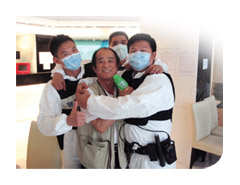
Instead of adopting a tough approach and ‘telling’ these emotional guests to behave, we listened to their concerns and requests with patience. Being away from home and with uncertainties ahead of them, they had every right to be upset. We showed our empathy and offered our assistance in every possible way.
Some issues raised were outside the Police charter, but the hotel guests showed appreciation for our swift referrals to the appropriate departments for handling. Once they understood that we weren’t there to put them ‘under surveillance’, but to facilitate the execution of the Quarantine Order and help them get through the seven-day quarantine period, I was happy to see smiles back on their faces.
The journalists were there to report the news to the public. Similarly, understanding their legitimate reasons for being there, we were able to facilitate their coverage of the incident. It was pleasing to note their understanding and cooperation with the media management measures in place. |
|
|
|
Attempted suicide
On Sunday morning (May 3, 2009), the third day since the Quarantine Order was implemented, a member of the hotel staff rushed up asking for my assistance.
“Police ... Police, please come with me to the rooftop. Some people are up there trying to do harm to themselves,” he said.
On arrival at the rooftop, I saw five people, two Germans and a Mainland couple with a young daughter. Having chatted with them in English and Putonghua, I realised that all they wanted was some sunshine and fresh air, something they had missed for days.
While the absence of any suicidal intention was a big relief for me, the mother of the five-year-old was upset about the effect of their unpleasant experience on her little daughter. She felt guilty for having chosen that particular hotel for their family trip to Hong Kong. As a father myself, I totally understood her feelings. I also understood that the mother’s emotions could get worse, if not handled properly. The case was then referred to the Social Welfare Department and the counselling provided to the family proved to be of great help.
Inter-departmental communication
The execution of the Quarantine Order was not a Police-led operation. Ultimate authority, with legislated regulatory powers, was vested with the Director of Health. Having said that, Hong Kong Police Force played a key supporting role, including effective information exchange, during the day-to-day operation and the daily interdepartmental meetings attended by the Hong Kong Police Force, DH and other Government departments/agencies involved.
Dispersal on May 8
Finally, the quarantine measures that had been imposed since May 1, 2009 were removed at 8:30pm on May 8, 2009 by the DH, leading to the final phase of the operation – the dispersal of the 286 hotel guests and staff. To ensure their smooth departure, the careful implementation of traffic control measures and management of over 240 journalists at the scene was essential. While there always existed a possibility of the situation developing into chaos, our detailed advance planning and the excellent co-operation amongst officers from various Police formations contributed to a smooth execution. What’s more, it was equally important that the dispersal phase should not, as far as possible, cause serious inconvenience to other members of the public. We achieved it!
Hong Kong Police Force cordoning and final dispersal phase was professionally and smoothly executed. These enormous tasks required cumulative effort and teamwork from many Police units, including the Police Tactical Unit, Traffic and Wanchai Police District, to get it done. Equally, if not more so, staff from all other Government departments involved in this operation exhibited a very high level of professionalism, teamwork, dedication to duty and inter-departmental co-operation, which brought about a very successful conclusion to the Quarantine Order.
Most importantly we showed, once again, that the Hong Kong Police Force and other Government departments serve the community in a professional and caring manner. Being one of the many officers involved in the very frontline of this operation, I am glad to have had the opportunity to work side by side in undertaking this challenging task with so many outstanding civil servants.
From one of the many Police officers who took part in this operation.
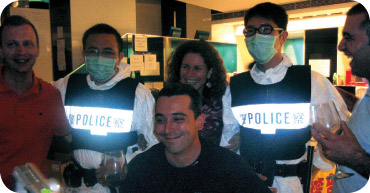 |
| Smiles are back on visitors’ faces. |
|
|