Department of Health
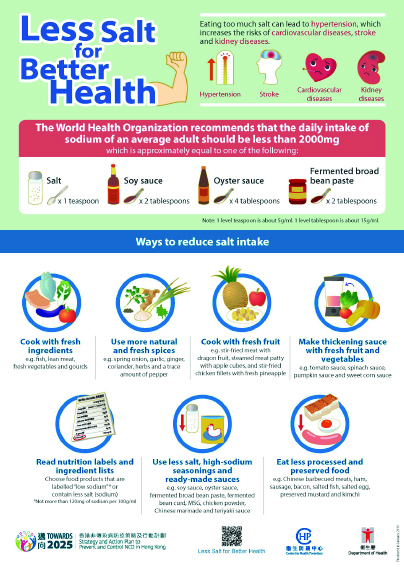
Putting a low-salt diet into practice is one of the key ways to maintain the ideal blood pressure levels. This requires reducing the use of seasonings like table salt and soya sauce, as well as avoiding sauces and foods that contain hidden salt such as black pepper sauce, all-purpose marinade, fish sauce and teriyaki sauce. Many people enjoy mixing rice with sauce or having soups of the noodles-in-soup dishes, but these sauces and soup are often high in salt and should be avoided. Moreover, preserved and processed foods such as fermented black soya beans, preserved mustard (mui choy), fermented bean curd, salted fish, salted duck eggs, preserved vegetables, ham, bacon, canned foods, and instant noodles with soup packets are also high in salt and should be consumed as little as possible.
If you want to put a low-salt diet into practice while retaining flavour, it is recommended to use natural ingredients, herbs and spices such as garlic, pepper, lemon juice, vinegar, basil, five-spice powder and paprika for seasoning. You may also make your own thickening sauces such as fresh tomato sauce, spinach sauce, pumpkin sauce and sweet corn sauce with fresh fruits and vegetables to enhance the flavour of the dishes. When dining out, you may try to choose dishes that are seasoned with natural seasonings and served with less gravy, or request that the sauce and other condiments be served separately.
Additionally, it is advised to reduce the consumption of processed or preserved foods, and opt for fresh ingredients more often. If there is not enough time to prepare fresh foods, you may consider using unprocessed frozen foods as their nutritional values are similar to that of fresh foods. Moreover, the sodium content of frozen fresh foods remains lower as there is no further processing or preservation involved, making them a healthier choice when compared with processed or canned foods.
Lastly, when purchasing pre-packaged foods, you should read the nutrition labels carefully and choose food products that are labelled “low salt” or “low sodium” (i.e. containing not more than 120 milligrams of sodium per 100 grams or 100 millilitres).
In sum, let us follow the principles of healthy eating, which will help us keep the kidneys healthy and reduce the risk of developing chronic kidney disease.