Civil Service Newsletter Editorial Board
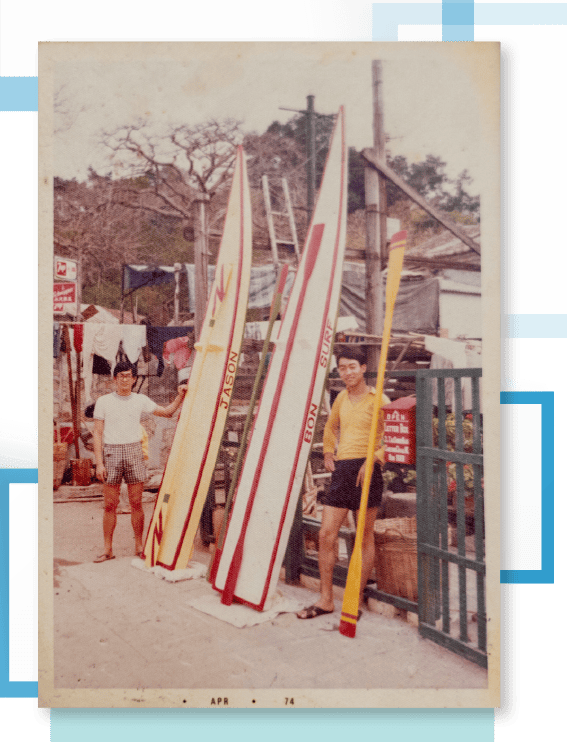
Mr Suen grew up on Cheung Chau with the sea as his companion. As his father was a sampan builder, his home was filled with all kinds of tools. Under his father’s influence, he learned how to use such tools and wood to make his own toys at his early age. Reminiscing about his childhood, he said with a smile, “Kids from urban areas played with ready‑made toys, but I made my own surfboards. The longest one was 12 feet long.” Those skillful hands eventually guided him into the world of construction.
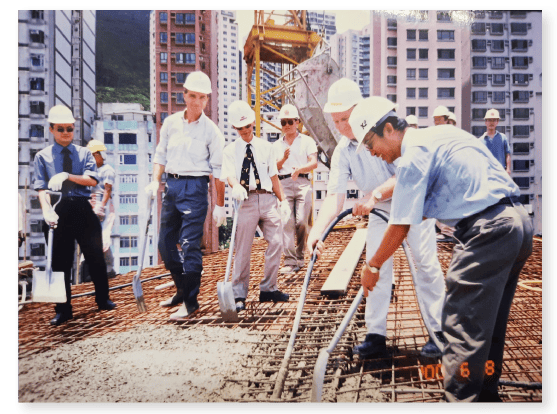
After graduating from secondary school, Mr Suen followed in his elder brother’s footsteps into the renovation business. However, staying on Cheung Chau meant limited income and opportunities. To widen his career path, he worked by day and studied construction craft at night to upgrade his professional skills. In 1976, he successfully joined the Foreman grade, embarking on his career in the civil service. By the time he retired, he was a Chief Clerk of Works at the Architectural Services Department (ArchSD).
Throughout his civil service career of over 30 years, Mr Suen participated in countless government projects. His primary responsibilities were to supervise contractors carrying out the works, ensuring the works met the required standards and were completed on schedule. He commented that a construction site was never a place where one could mindlessly go by the book. Various construction processes took place at the same time, and manpower, materials, and progress were all interconnected. The situation changed fast and a misstep might affect the whole project. Entrusted with responsibilities to supervise the works, he was obliged to track the overall progress while keeping an eye on every single detail. “When problems arise, the most important thing for a supervisor is to quickly identify the cause and fix the problems one by one. Whenever you face a new project, it is a great challenge, but also an opportunity to gain experience and learn how to handle difficult situations.”
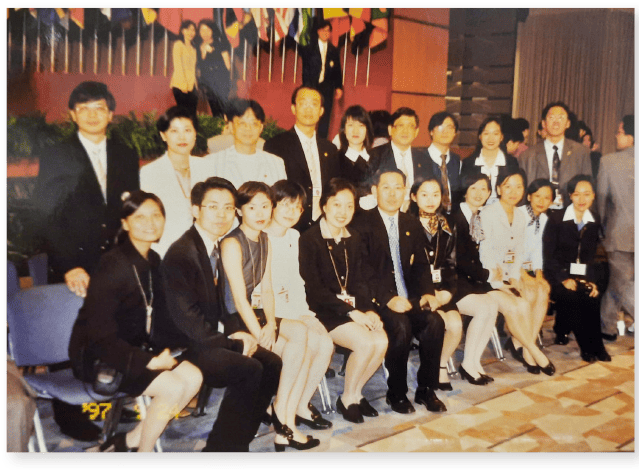
During his career, his secondment to the Hong Kong Monetary Authority in 1997 was the most unforgettable. That year, the Annual Meetings of the World Bank Group and the International Monetary Fund were held at the Hong Kong Convention and Exhibition Centre. As it was a major international event, the requirements for venue facilities and engineering support were exceptionally stringent. Mr Suen was responsible for overseeing various works at the venue, including constructing VIP offices and conference rooms, and optimising air conditioning systems. The task involved complex processes and tight schedules, leaving absolutely no room for error.
“With a huge international conference just around the corner, everything from venue setup to the finest details had a direct bearing on the overall impression and Hong Kong’s professional image,” Mr Suen recalled, with the experience still fresh in his mind. He added, “During construction, we encountered a water dripping issue. The team had to locate the source and resolve it in the shortest time possible. The site environment was complex enough, and under such time pressure, it put a supervisor’s judgment, adaptability, and coordination skills to the ultimate test.” Finally, the works were completed on time and the facilities were put into use smoothly, leaving Mr Suen with a deep sense of pride.
After retiring in 2010, Mr Suen did not slow down. He served as a technical consultant for construction works under the Non-Civil Service Contract Staff Scheme at ArchSD for eight years. During this period, he was engaged in various tasks, including refining project management manuals and enhancing site knowledge management. By systematically consolidating his site experience gained over the years, he offered a wealth of valuable resources for the industry.
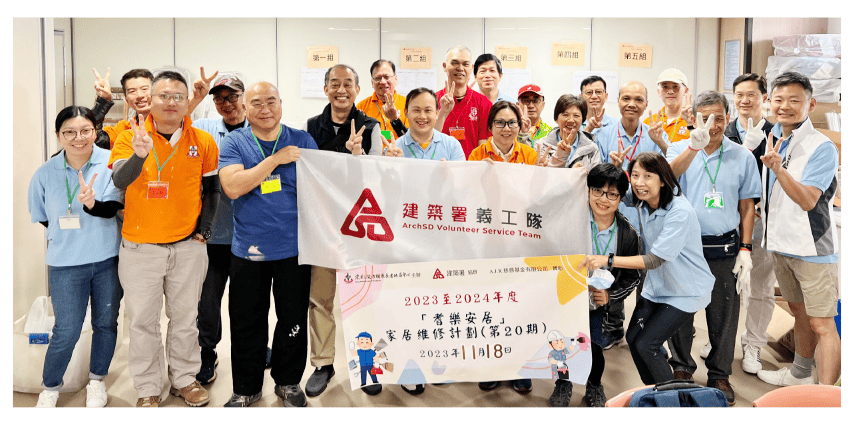
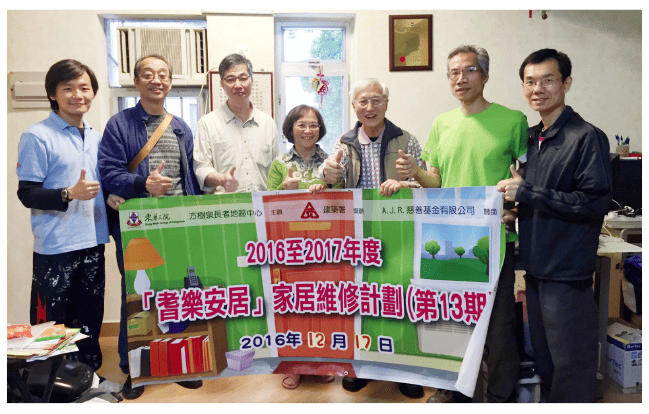
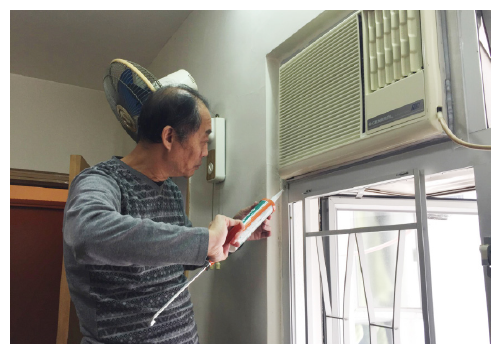
His commitment to passing on experience was extended to his volunteer work. As early as 2004, Mr Suen and his colleagues at ArchSD formed a home repair volunteer team to carry out home repair and improvement works for the elderly. Leveraging his early experience in renovation business and knowledge gained at sites over the years, he taught team members how to handle simple home repairs, enabling the team to complete basic works in a day, effectively improving the living environment of the elderly. For him, this not only allowed him to pass on his professional skills but also gave him a way to serve the public after work.
Exercise is an important part of Mr Suen’s life outside his daily work. Growing up on Cheung Chau, he fell in love with swimming at a young age and built a lifelong habit of doing exercise. After joining the Government, he met a supervisor who had taken up Tai Chi to cope with sciatica. Seeing his boss’s health steadily improve sparked his own interest in traditional Chinese exercises. He began learning Tai Chi from his supervisor and went on to practise Baduanjin and Yijinjing, gradually coming to appreciate their true value. “Running or strenuous exercises are not for everyone, but almost anyone can start with gentler traditional Chinese exercises to ease their body and mind and strengthen their health.”
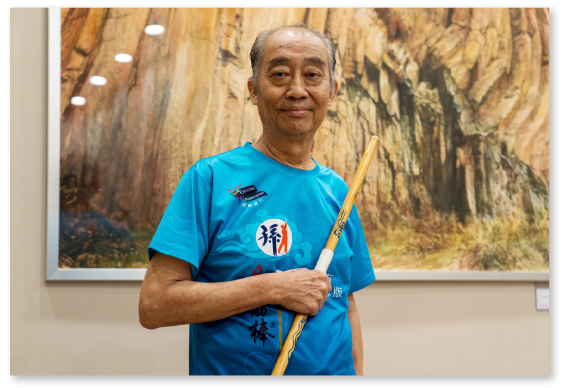
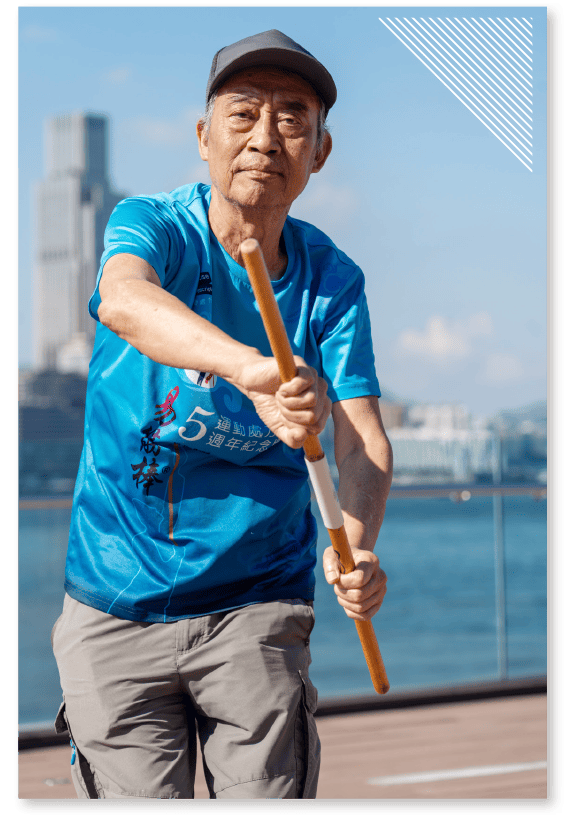
What truly opened another door for him after retirement was the Yijinbang exercise, which he first encountered in 2013. By holding a long stick to assist with body stretches, the movements appear simple yet effectively improve joint mobility, loosen tendons, and relieve shoulder and neck discomfort. It is suitable for people of all ages and fitness levels. “Some people may not have a background in sports and may struggle with complex movements; with the Yijin stick as an aid, it is easier to master the direction and range of the stretches.”
However, Mr Suen did not just stop at learning a set of movements. Over the years, he continuously drew upon his experience in traditional Chinese exercises to refine and develop new movements for the Yijinbang exercise. He placed a special emphasis on lower-body stretches to make the overall practice more comprehensive and the system more complete, gradually evolving his own signature routine - “Suen Yijin”.
In 2014, Mr Suen was invited by the Hong Kong Cancer Fund to teach the Yijinbang exercise to cancer survivors and their caregivers. He said, “Some participants were quite weak after completing their treatments and were hesitant about exercising; caregivers, too, were under constant stress and tended to neglect their own physical needs. When I saw their physical and mental health gradually improve through step-by-step practice, I was even more convinced of the value of the exercise.” During his classes, he has not only taught the movements but also placed great emphasis on giving encouragement and support, helping students understand that as long as they go at their own pace, anyone can take the first step towards better health.
Over the years, as the number of students grew, Mr Suen began actively training successors to keep the traditional Chinese exercise alive. He strived to distil his personal experience into a sustainable legacy, aiming to let more people bring this exercise into the community. He firmly believes that health is not merely a personal pursuit; through mutual learning and inspiration, it can become a form of positive energy to be shared, which is precisely the concept of “shared health” that he advocates.
“When someone learns something and is willing to teach it to those around them, the benefits extend beyond themselves to their family, friends, and even the entire community.” In recent years, he has organised and participated in numerous large-scale community events, including the “Thousand-person Yijinbang Exercise Day”, to encourage the public to establish a regular exercise routine. He hopes that through group participation, more people will come to understand that exercise can be a part of their life and can bring people together.
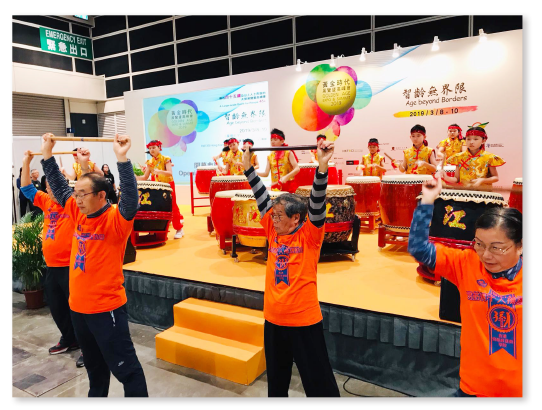
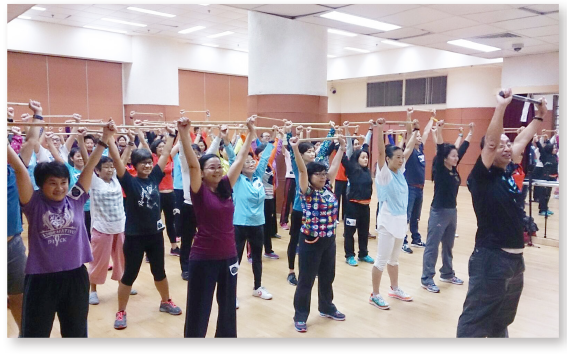
In 2025, Mr Suen faced a major trial when he was diagnosed with acute leukaemia. Despite this sudden illness, he remained calm and determined, doing his best to keep his mind and body in good condition. While in hospital and during his at-home recovery, he continued to practise simple Yijinbang movements whenever his physical condition allowed. He believed that appropriate exercise helped promote qi (energy) and blood circulation, which would speed up recovery.
He admitted that when his health was at its lowest point, the movements he could manage were limited. However, this experience only deepened his understanding of the importance of perseverance. “It is not about how much you do, but about doing a little bit persistently, based on your own condition,” he said. “This kind of perseverance is not just about doing exercise but a mindset for facing adversity.”
In March 2026, he gradually resumed teaching Yijinbang exercise, once again stretching and regulating breathing alongside his students. He candidly shared his experiences and insights from his illness, encouraging students to exercise persistently according to their own condition. After all, health is not achieved overnight but accumulated gradually through daily practice.
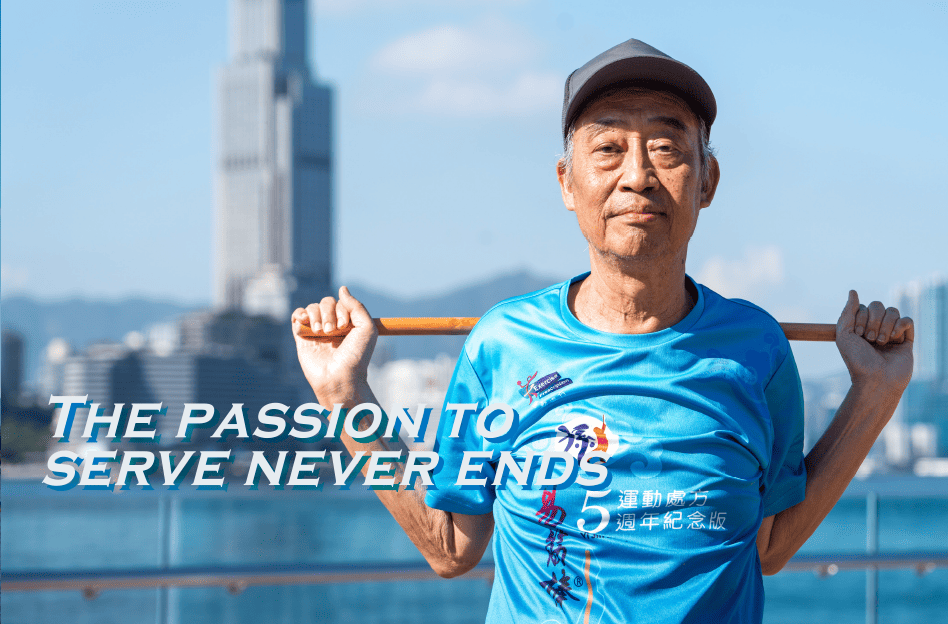
Mr Suen firmly believes that only by maintaining good health can one better serve society, care for one’s family, and live a fulfilling and meaningful life. Even though he has retired for many years and has gone through the test of illness, he refuses to slow down. Instead, he continues to promote the importance of exercise in the way he knows best. In his hands, that seemingly ordinary Yijin stick is not merely a tool for physical fitness; it acts as a bridge connecting health, compassion, and passing on of experience. More importantly, it carries forward his passion for serving the community.