Civil Service Newsletter August 2026 Issue No.122
共建健康香港 體重管理  始於工作間

Department of Health

Amid our busy schedules, many of us find it hard to spare time to manage our health. We are often occupied with meetings, multiple deadlines for work and family commitments, and hence easily neglect the need to care for ourselves. However, mental and physical well-being, especially maintaining a healthy weight, is the key to achieving long-term health benefits.

Globally, adult obesity has more than doubled in the past three decades. In Hong Kong, the proportion of adults who are overweight or obese rose from 47.0% in 2014/15 to 51.3% in 2020/22. Obesity is a risk factor for a number of chronic health conditions, including diabetes, high blood pressure, high cholesterol, stroke, and many common types of cancers.
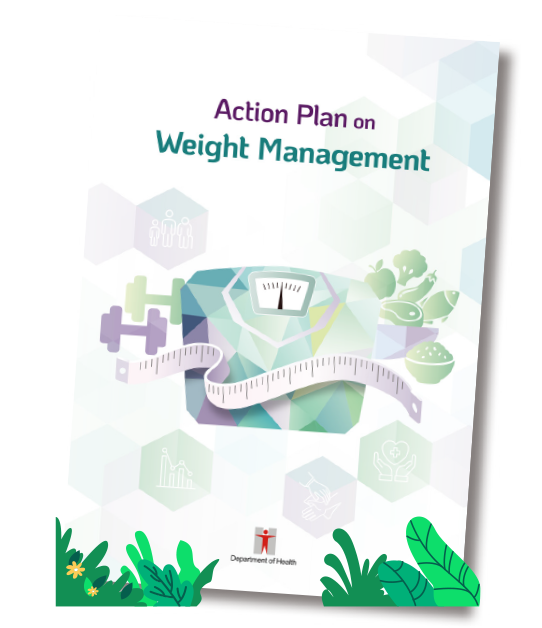
Action Plan on Weight Management

Cross-sector collaboration to promote weight management

Thankfully, small changes in daily life can make a real difference. In view of this, the Chief Executive announced in the 2025 Policy Address that weight management would be prioritised as a key public health issue. The Government launched Hong Kong’s first Action Plan on Weight Management on 4 March this year to support World Obesity Day. Moreover, an inter-departmental working group was also established in October last year to co-ordinate efforts in healthcare, education, recreation, urban planning, and other areas. As civil servants, we are not only implementers of this plan, but also act as its promotion ambassadors. We are leading by example and promoting mutual support among colleagues, with a view to building a healthy culture across the civil service and in all sectors of the community.

體重管理行動計劃 x 日行萬步挑戰 啟動禮暨嘉年華
On 21 March 2026, the Department of Health held a launching ceremony and carnival for the “Action Plan on Weight Management x 10 000 Steps a Day Walking Challenge” at the West Kowloon Cultural District to encourage members of the public to pay attention to their health, integrate physical activity into their daily lives by walking 10 000 steps a day and manage their weight persistently. The Acting Secretary for Health, Dr Cecilia Fan Yuen-man (centre); the Director of Health, Dr Ronald Lam Man-kin (fifth left); the Controller of the Centre for Health Protection, Dr Edwin Tsui Lok-kin (fifth right); together with representatives from the Occupational Safety and Health Council, the Task Group on Promotion of Physical Activities, the Education Bureau, the Environment and Ecology Bureau, the Housing Department, the Leisure and Cultural Services Department and the Planning Department, as well as artist Mr Alex Fong Lik-sun, officiated at the launching ceremony.
Integrating health into the workplace

Our workplaces can serve as an important base for driving positive changes. Here are some practical ways to promote weight management:

Eating well together
Choose water or unsweetened beverages over sugary drinks during meetings and gatherings.
When ordering lunch for the team, consider including lighter, balanced options with more vegetables and less fried food.
When dining out, choose to patronise EatSmart Restaurants that offer “3 Less” dishes (i.e. less fat or oil, salt and sugar) and “More Fruit and Vegetables” dishes.
Moving more and sitting les
Include a three-minute stretch break during long meetings.
Use the stairs instead of the lift for lower floors.
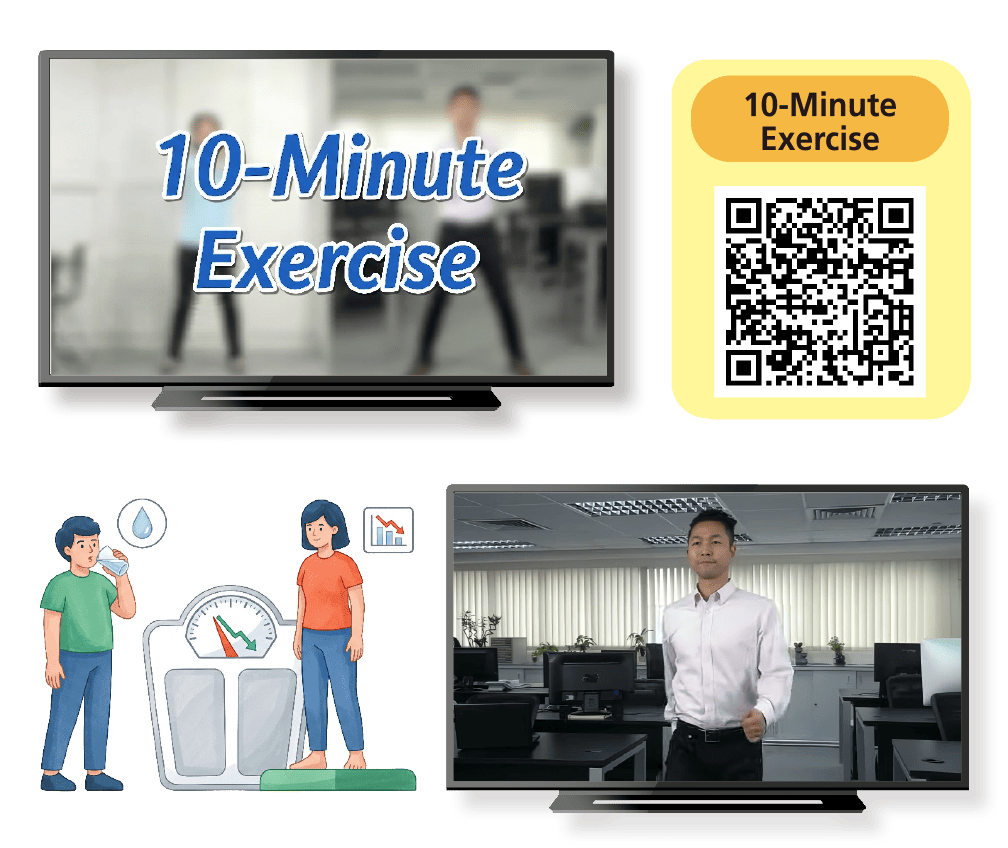
Organise lunchtime walking groups with colleagues. Join the Department of Health’s “10 000 Steps a Day” Walking Challenge via the “e+Life” platform in the eHealth App to record step count, earn Health Coins, and redeem gifts.
Wear sporty or casual attire on Dress Casual Fridays (introduced across the civil service in 2022), so you can take part in activities after work or during breaks without needing to change clothing.
Small habits that make big impacts
If your bureau or department has a spare room or space, open it up during lunchtime for colleagues to do stretching or light exercise.
Post signs near lifts to encourage stair use.

What are the standards for a healthy weight?

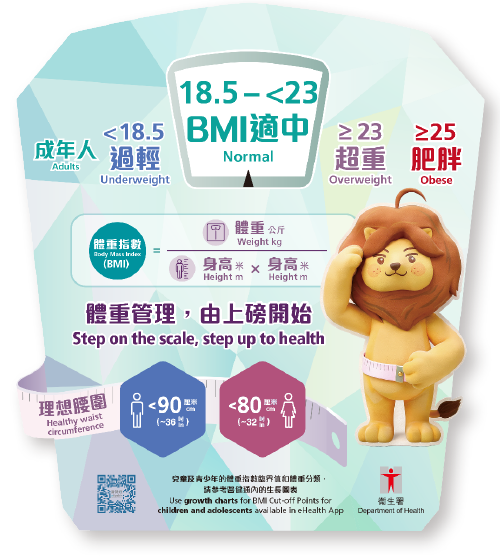
Chinese adults should maintain their BMI between 18.5 and less than 23.0. A BMI from 23 to less than 25 is considered overweight, while a BMI of 25 or above is considered obese. Waist circumference is of equal importance. Central obesity is defined as having a waist circumference of 90 cm or above for men and 80 cm or above for women.

These are just some easy ways to assess your weight status, but health is about much more than numbers.

Learn more

For more tips and resources, please visit the thematic webpage on weight management and explore the eHealth App. Together, we can support one another to create healthy workplaces, and build a stronger, more vibrant Hong Kong one step at a time.