Civil Service Bureau
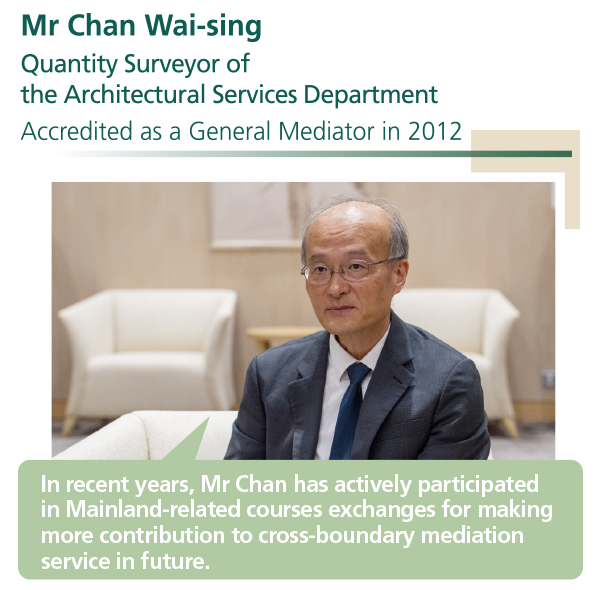
Mr Chan is responsible for drafting and managing contracts in the Architectural Services Department. His work usually involves construction projects, contract terms and implementation arrangements. According to Mr Chan, construction projects involve numerous processes and parties, and often a large sum of money. If disagreements arise during the execution of contracts and are not handled properly, disputes can easily escalate, and project progress and working relationships will be affected. With over a decade of mediation experience, Mr Chan considered that mediation skills are very useful in his daily work. When handling contracts, he has been looking beyond mere clauses and attribution of liabilities, and focus more on understanding the genuine concerns of the parties, aiming to address disagreements by turning confrontation into constructive dialogue.
He noted that after learning mediation, his perspective on disputes had changed immensely. “In the past, I tended to start by looking at the terms of the contract and issues of liabilities, focusing on the responsibilities and liabilities of each party; but after learning mediation, I have come to realise that many so-called contractual disputes stem from communication gaps, emotional reactions, or even differing interpretations of risks and arrangements among the parties.” To him, mediation is not only a tool for resolving disputes, but also a mindset that helps people re-establish communication. This mindset has guided him, when dealing with contractors and other stakeholders, to first identify the core of the issue and understand each party’s position and concerns, and then advance the discussion step by step, creating more room for addressing differences.
Mr Chan shared that being listed on the GBA Mediator Panel 2025 serves as a recognition as well as a stimulus for improvement, giving him the motivation to continue deepening his understanding of the development of arbitration, mediation and commercial dispute resolution in the Mainland. In recent years, he has actively participated in Mainland-related courses and exchanges, aiming to get a better grasp of institutional frameworks, language environments, and practices in different GBA cities. He has also made efforts to expand his industry network for making more contribution to cross-boundary mediation service in future.
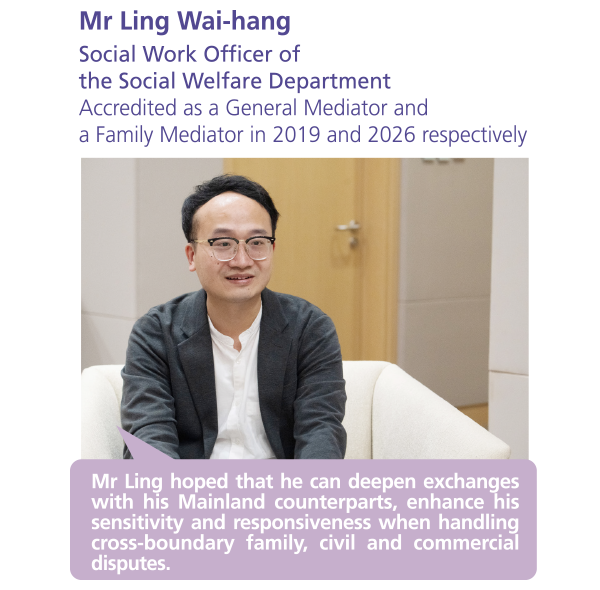
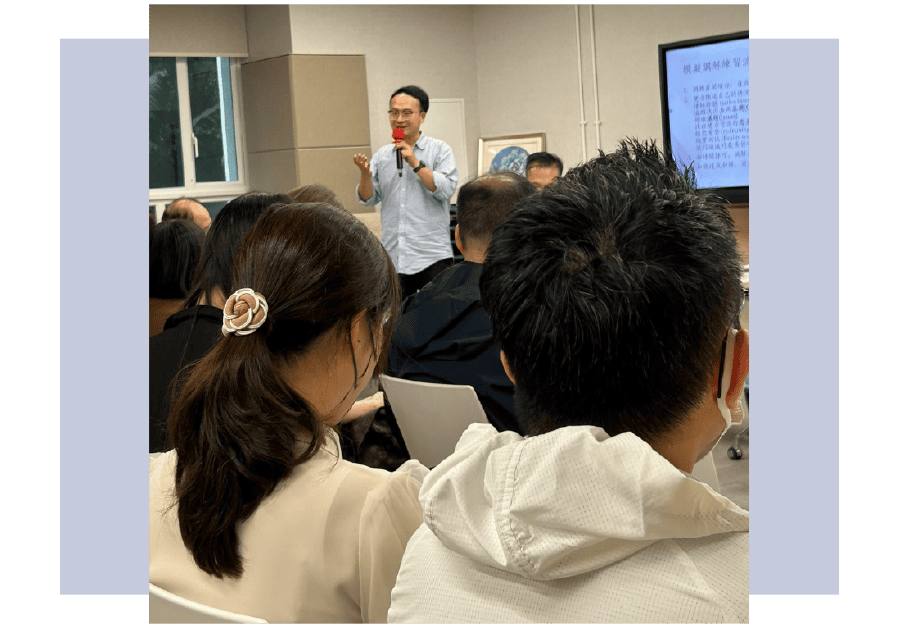
Mr Ling’s connection with mediation started in his days in secondary school, when he participated in a school-based peer mediation programme organised by a non-profit-making organisation and first heard of the concept of mediation. After graduation and entering the workforce, he found that mediation skills could virtually be used in any jobs he worked. He therefore enrolled in a comprehensive mediation programme to obtain certification, and further studied family mediation. Currently working in the Family and Child Protective Services Unit of the Social Welfare Department, he frequently handles family cases relating to custody, guardianship and access. He remarked, “Many family conflicts appear on the surface to be issues of procedures, arrangements, or responsibilities, but in fact they are often intertwined with grievances, anxiety, and feelings of being misunderstood. If one rushes to reason with the other party or explain the system, it may become even harder for the other party to listen. On the contrary, if you first give sufficient space for the other party to express themselves, and gradually help them sort out matters of genuine concern, it is often easier to steer the dialogue back on track.”
Mr Ling believed that, with more and more exchanges between the Mainland and Hong Kong, cross-boundary disputes involving marriage, child arrangements and family relationships may also increase. If Hong Kong mediators can combine their local family mediation experience with a GBA perspective, it will help provide an additional platform for rational communication for the parties concerned. In recent years, Mr Ling has also had frequent exchanges with Mainland mediation-related organisations and platforms. He once had the opportunity to participate in handling a dispute mediation case in the Mainland, personally experiencing the Mainland’s practices and operating models in diversified dispute resolution. He said, “This experience has made me more profoundly realise that if we can build mutual trust on the basis of respecting differences, mediation can still serve as an important bridge to help parties resolve disagreements despite differences in the systems, procedures and cultural backgrounds in Guangdong, Hong Kong and Macao.”
For Mr Ling, being listed on the GBA Mediator Panel 2025 has given him an opportunity to understand more about the role of a mediator. With the aim of providing an option for people in need to resolve their conflicts through dialogue, he will strive to deepen exchanges with his Mainland counterparts, enhance his sensitivity and responsiveness when handling cross-boundary family, civil and commercial disputes, and participate in more mediation work in the GBA in future.
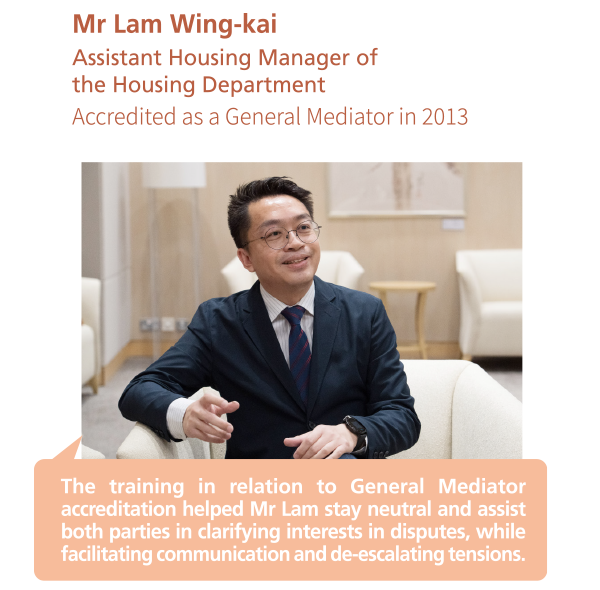
Mr Lam has worked in public housing estates for many years. In his daily work, he often interacts with residents and handles neighbourhood disputes, complaints,and matters relating to owners’ corporations. Having worked in the front line for so many years, he knows too well that a lot of conflicts stem from minor issues which, if not addressed promptly, may lead to deepened misunderstandings and prolonged tensions. “Instead of solely relying on experience to tackle the issues, I have studied related courses to learn how to handle disputes in a more systematic way,” he said.
After completing the studies, Mr Lam has come to appreciate more the importance of a mediation mindset at work. He said, “A mediator needs to stay neutral and help clarify interests in disputes, while facilitating communication and de-escalating tensions. I can also apply these skills to my work.” When faced with complaints and disputes, he no longer reacts by simply “responding to complaints”. Instead, he will adopt a neutral stance, listen carefully to each party, and find an entry point to drive the matter forward.
After being listed on the GBA Mediator Panel 2025, Mr Lam found that the biggest benefit was the broadening of his perspectives. “In the past, my work and services primarily focused on the local community in Hong Kong, but now I will think about the mediation work more from the perspective of regional collaboration. I have travelled to Macao for an exchange of insights on mediation cases with its property management industry and got a better understanding of the similarities and differences between the systems of the two places.” Mr Lam opined that Hong Kong has traditionally placed greater emphasis on procedures, fairness, and facilitative mediation, and these experiences may prove to be an advantage when handling cross-boundary cases. Looking ahead, he hoped that he can leverage the experience gained in frontline estate management over the years to better carry out mediation work in the GBA in future.
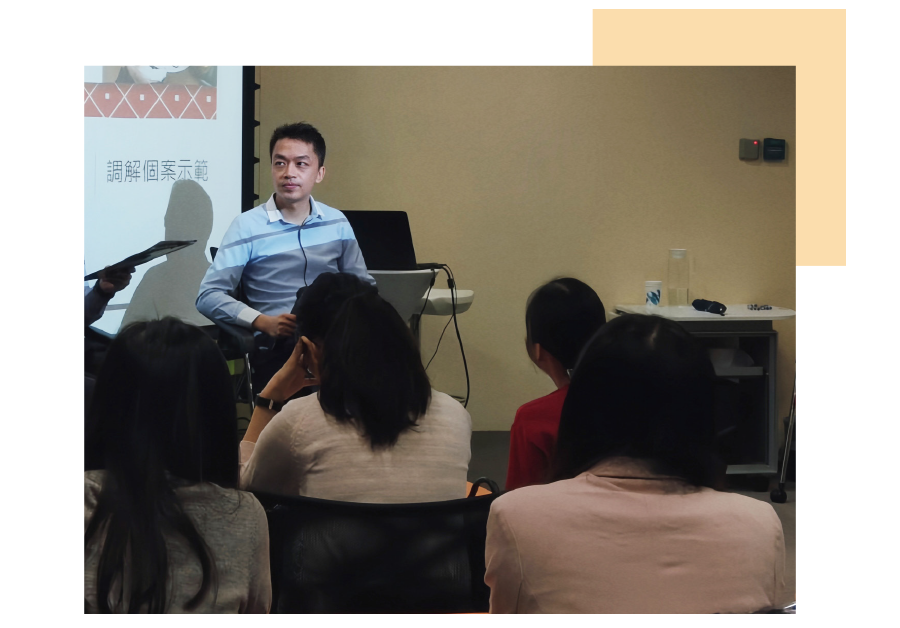
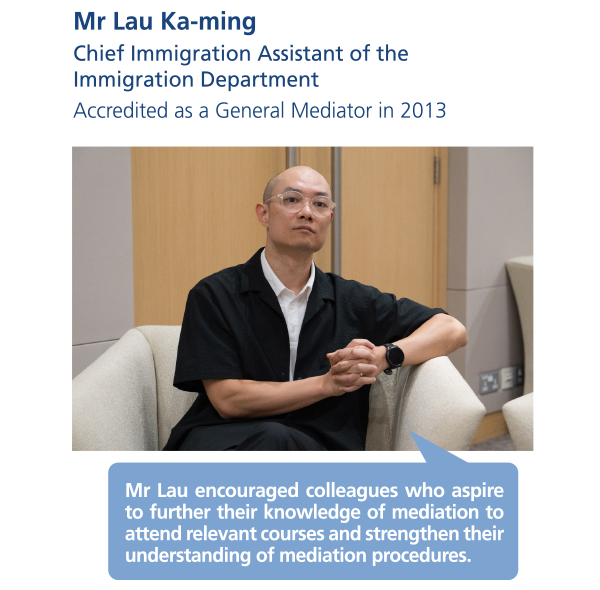
Mr Lau currently works in the Foreign Domestic Helpers Section of the Immigration Department, and his main duty is to answer telephone enquiries regarding visa applications of foreign domestic helpers. Every day, he handles all sorts of telephone enquiries, such as questions about application requirements, application status, and submission of supplementary documents. He understood that a majority of the callers are very anxious and hope that the visa applications of the foreign domestic helpers hired by them will be approved. “I remain objective when listening to enquirers’ requests and concerns, hoping to communicate with them harmoniously and in a constructive way,” Mr Lau shared. “After helping them calm down, I offer appropriate advice and solutions.” In his opinion, in order to genuinely help the public over the phone, making them feel being listened and understood is as important as providing them with clear information. Only when the enquirers are in a stable mood can they listen calmly and understand the relevant information, making the communication effective. Such patience and empathy are the attributes developed through his years of training in mediation.
Looking ahead to the development of the GBA, Mr Lau firmly believed that civil service colleagues have an edge in mediation. He explained, “With years of public service experience, our colleagues interact with people from all walks of life and have a fair understanding of public policies and the judicial system. As long as they are prepared to spend time learning proactively, they will soon have a good grasp of the systems and operation modes of different GBA cities. They will also learn more about the similarities and differences in the laws and regulations, procedures, and culture of various places, so as to leverage their strengths in cross-boundary mediation.”
Mr Lau encouraged colleagues who aspire to further their knowledge of mediation to stay tuned to relevant courses and strengthen their understanding of mediation procedures. He added that the true value of mediation skills lies in practice. If colleagues make good use of these skills in their daily work and life, they will benefit greatly, and the overall quality of public services will also be enhanced.