
Promoting gold market development to further
expand the financial services sector
Accolades for exemplary civil servants and outstanding civil service volunteers


Civil Service Newsletter Editorial Board
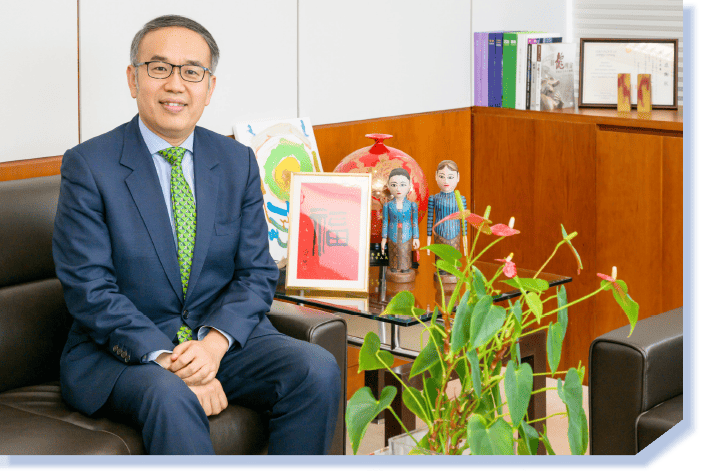
“It is impossible for an international financial centre to rely on a single product over the long term,” Mr Hui said. He emphasised that Hong Kong must develop full-fledged market systems to consolidate its status as a comprehensive international financial centre. Apart from equities and bonds, commodities are also indispensable. Among various commodities, precious metals possess the strongest financial attributes and best align with Hong Kong’s existing advantages, making them the most suitable entry point.
In respect of the global gold market, Mr Hui summarised the existing landscape as a “division of labour in three locations”: physical storage and spot trading are concentrated in London, the United Kingdom; the futures trading market is predominantly in the United States; and refining has long been dominated by Switzerland. “However, in the Asian time zone, there has yet to be a market that can concurrently serve all of these three functions.”He explained that with the increasingly complex international situations, various types of investors, including governments, central banks, institutions, and family offices, no longer solely seek returns. Instead, they place greater emphasis on portfolio diversification and risk management.“The Chinese saying ‘buying gold in times of chaos’ reflects this pressing demand. With the strong support from the Motherland and as a city practising the common law with well-developed financial infrastructure, Hong Kong is uniquely endowed with the advantages to concurrently develop these three major business areas, i.e. spot trading, futures trading, and refining. We will strive to consolidate and elevate our status as a leading gold hub in Asia and globally,” Mr Hui added.
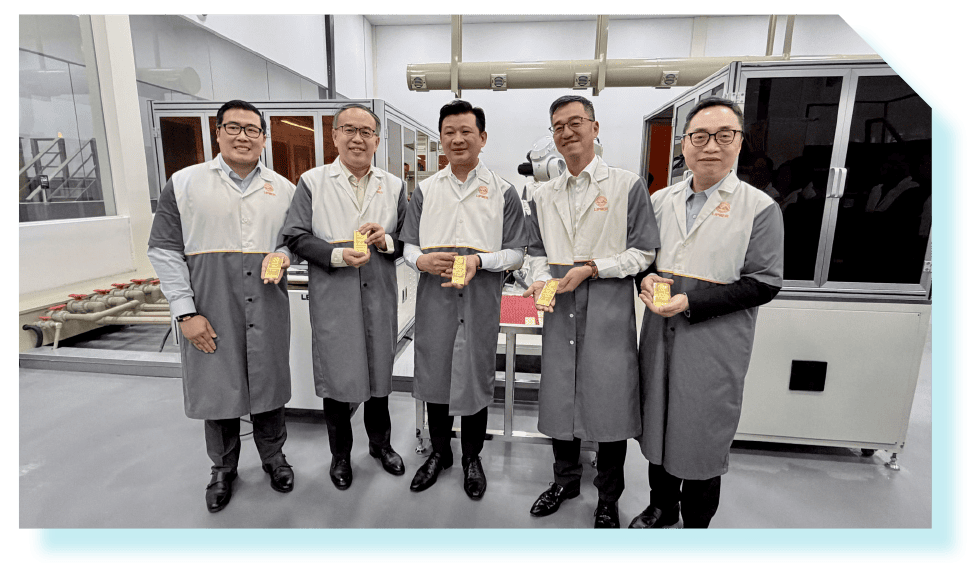
Hong Kong’s brand new central clearing and settlement system for gold attracts global market participants by offering a full range of services in clearing, connectivity, price discovery, risk management, storage and insurance. The design of the whole system is comprehensive and well-planned. “The basis of any commodity contract must include storage and delivery. Otherwise, no one will trust the price and the price discovery mechanism will also fail,” said Mr Hui. In view of this, the Government has proposed that Hong Kong’s gold storage capacity will be expanded to over 2 000 tonnes within three years, of which 1 000 tonnes of storage will be developed by the Airport Authority Hong Kong while the remainder will be undertaken by the market. Meanwhile, over 10 refining enterprises qualified under international standards have expressed interest in establishing a presence in Hong Kong. Instead of a single business, Hong Kong aims to build a comprehensive ecosystem that is capable of supporting spot trading and clearing, derivative products, physical delivery and storage, as well as refining.
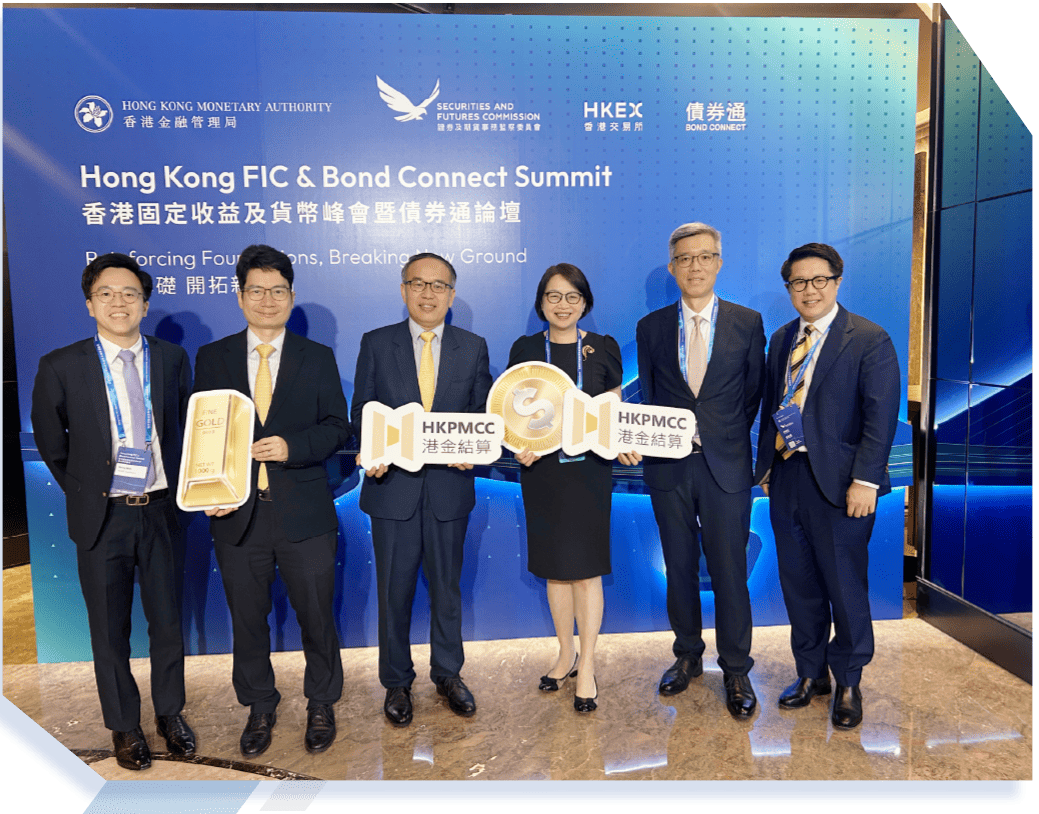
One of the highlights of the new settlement system is the rolling out of the Delivery Connect with the Shanghai Gold Exchange. The Hong Kong Precious Metals Central Clearing Company Limited (HKPMCC) has become an international member of the Shanghai Gold Exchange and opened a physical gold account. Market participants can deposit their physical gold holdings into the designated vault of the Shanghai Gold Exchange International Board in Hong Kong. Through two-way transfer, gold trading can be conducted in the on-exchange market of the Shanghai Gold Exchange International Board while the flow of gold is allowed in the over-the-counter market of Hong Kong, thereby connecting the gold markets of Shanghai and Hong Kong for mutual benefit and win-win outcomes. Mr Hui said that this demonstrates the distinctive advantage of Hong Kong under the “One Country, Two Systems”. “Under the settlement system, the two markets of Shanghai and Hong Kong are interconnected, while the on-exchange and over-the-counter markets are also linked up. This unparalleled advantage is not replicable by other financial centres,” he said.
Unlike other markets with clearing services predominantly provided by the private sector, HKPMCC is wholly owned by the Hong Kong Special Administrative Region (HKSAR) Government. Clearing companies act like an “intermediary” in each transaction, and the credibility of the “intermediary” is therefore of utmost importance. Mr Hui explicitly indicated that the Government has taken up this role to respond to the needs of the times. He mentioned, “Amid the profound changes, security, predictability and credibility always come first. I believe that the most trustworthy entity in the world must be the Government.” Gold, as an asset for long-term value preservation, requires a particularly high level of trust in the systems. The HKSAR Government has taken the lead to operate the clearing company, which is to meet the market needs.
Unlike other markets with clearing services predominantly provided by the private sector, HKPMCC is wholly owned by the Hong Kong Special Administrative Region (HKSAR) Government. Clearing companies act like an “intermediary” in each transaction, and the credibility of the “intermediary” is therefore of utmost importance. Mr Hui explicitly indicated that the Government has taken up this role to respond to the needs of the times. He mentioned, “Amid the profound changes, security, predictability and credibility always come first. I believe that the most trustworthy entity in the world must be the Government.” Gold, as an asset for long-term value preservation, requires a particularly high level of trust in the systems. The HKSAR Government has taken the lead to operate the clearing company, which is to meet the market needs.
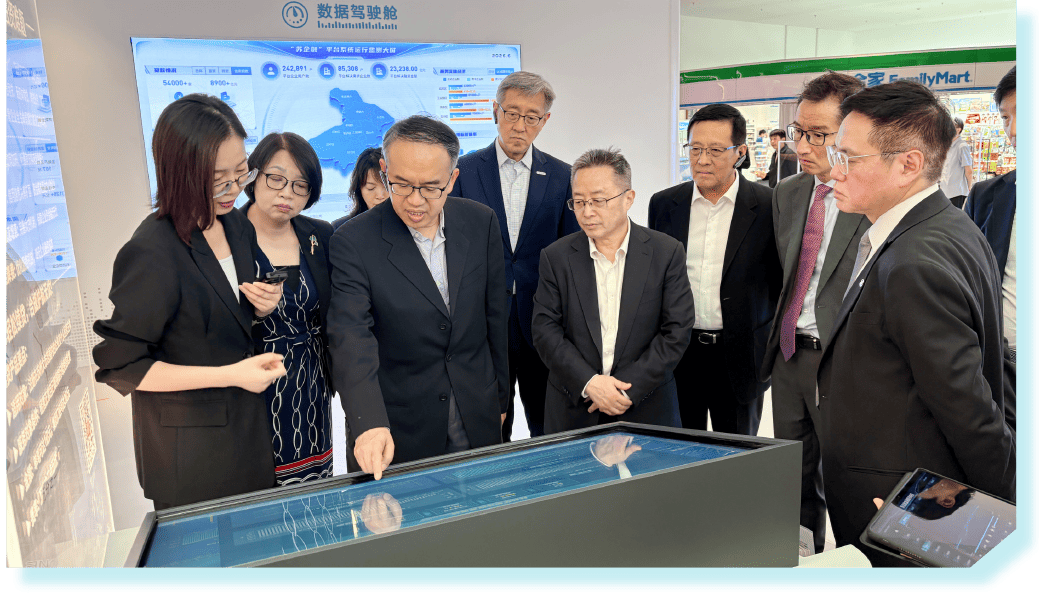
Speaking of how to take forward the initiative from conceptual planning to implementation, Mr Hui shared that the key to success is “effective leadership, strategic planning, and resolute implementation”. He said that “effective leadership” refers to the Chief Executive’s forward-looking proposal in the 2024 Policy Address that an international gold trading centre would be developed, setting a clear direction for the policy concerned. Under this direction, it is easier for the Government, regulatory bodies and the industry to reach consensus and move towards the same goal.
Regarding “strategic planning”, Mr Hui said that the progress of the initiative did not rely on a fully developed blueprint from the outset. Instead, the direction became clearer gradually through constant communication and refinements. He recalled that he paid a visit to the Shanghai Gold Exchange during his leave in October 2024, when he proposed a framework for co-operation to its Chairman. Through the visit, he is more convinced that solid collaboration cannot be based on unilateral dependence; it must be established on the basis of mutual benefit. In view of this, Hong Kong is advancing infrastructure arrangements, including the central clearing and settlement system, storage and delivery systems, while exploring Delivery Connect with the Shanghai Gold Exchange, thereby translating the vision of co-operation into concrete mechanisms.
On “resolute implementation”, Mr Hui highlighted the pivotal role of the civil service team. He noted with a smile, “The entire preparation process felt somewhat like running a start-up. While the direction was clear, it required constant adjustments in implementation. In particular, our civil service colleagues have made proactive efforts to acquire new knowledge, continuously resolved problems, and refined details.” He further said that politically appointed officials and the civil service team performed their respective duties while supporting one another in taking forward the initiative. “In my case, before joining the politically appointed team, I worked in the financial sector for a long period of time, with a good understanding of the market pulse and practical operations. Market practitioners may sometimes focus more on individual experiences or immediate needs. Therefore, it is necessary for the civil service team to perform its role of gate-keeping and planning from a holistic perspective.”
Drawing on the experience of implementing the settlement system, Mr Hui reminded civil servants that amid the major changes across the globe, the Government has to proactively serve as an organiser in the market, in addition to its role as the market facilitator. He pointed out that the unique value of the Government lies not merely in its knowledge of planning contexts, development pace and policy directions which may not be fully known to external parties, but also in its ability to co-ordinate resources, engage different stakeholders and forge consensus. Amid the current global competition, the development paths of economies around the world become increasingly similar. What makes the difference is usually the organisational and execution capabilities, which have always been the key strengths of Hong Kong’s civil service team.
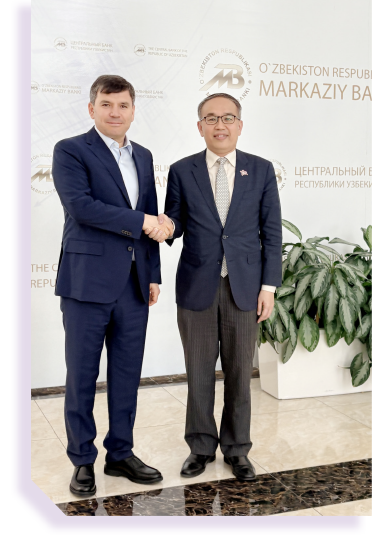
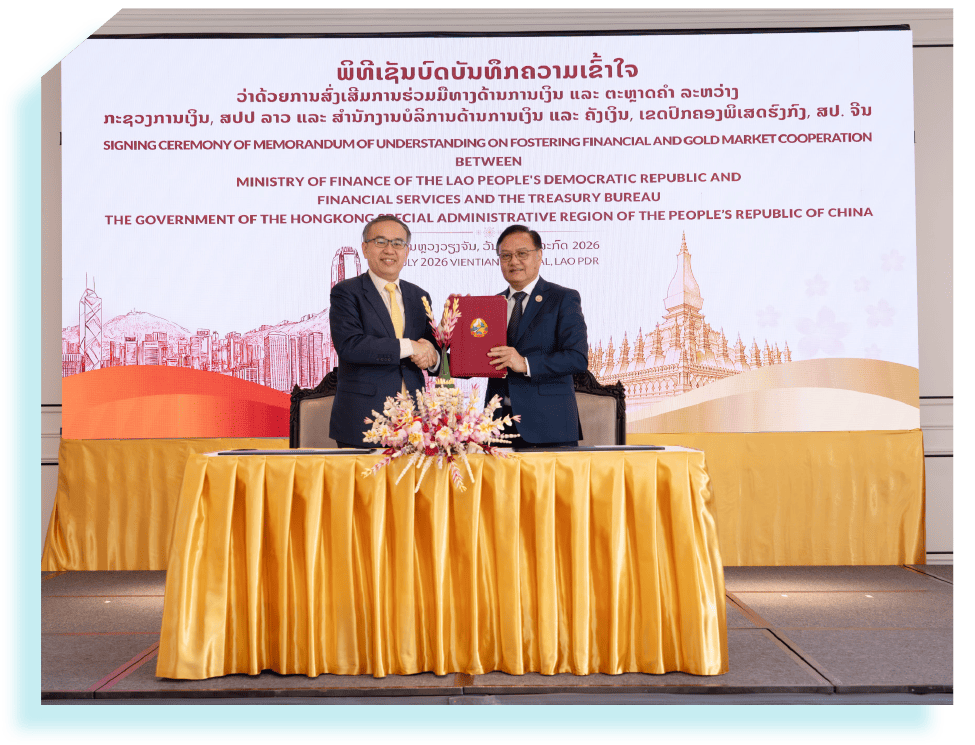
These capabilities are not only shown in internal co-ordination and policy implementation, but are also manifested in external engagement. From time to time, the Government negotiates and signs agreements with other regions. While talking about these processes, Mr Hui recalled that foreign officials expressed admiration for the staunch commitment demonstrated by the HKSAR Government, its targeted follow-up actions, and effective planning in facilitating implementation. He added that he really cherishes each and every opportunity to exchange views with foreign officials in overseas visits, during which he would take the initiative to introduce Hong Kong and the HKSAR Government team, so as to tell the good stories of the city for overseas people to fully understand the Hong Kong spirit.
Reading is an effective way for Mr Hui to unwind amid his hectic work schedule. He always brings along a book with him, even on his duty visits. To Mr Hui, books have an emotionally calming effect. He remarked with a smile, “Despite the fast-paced work environment, I always remind myself not to make hasty decisions when feeling overwhelmed as that likely prone to error. Reading allows me to step back a bit from present distractions, and to see that the challenges I face today may have been encountered by people in ancient times.” He quipped that reading is a “great bargain”. “You only live once, but through reading about the stories of others, in a way, you get to own different life experiences,” he explained.
In an era where social media acts like an echo chamber, he increasingly appreciates the value of reading. “Algorithms feed you content based on your preferences and interests, and imperceptibly narrows your perspectives. Over time, it is easy to fall under the illusion that the majority of people share your views, distancing you from reality before you know it.” For this reason, he makes a conscious effort to read extensively to broaden his horizons and stay open to different experiences and perspectives.
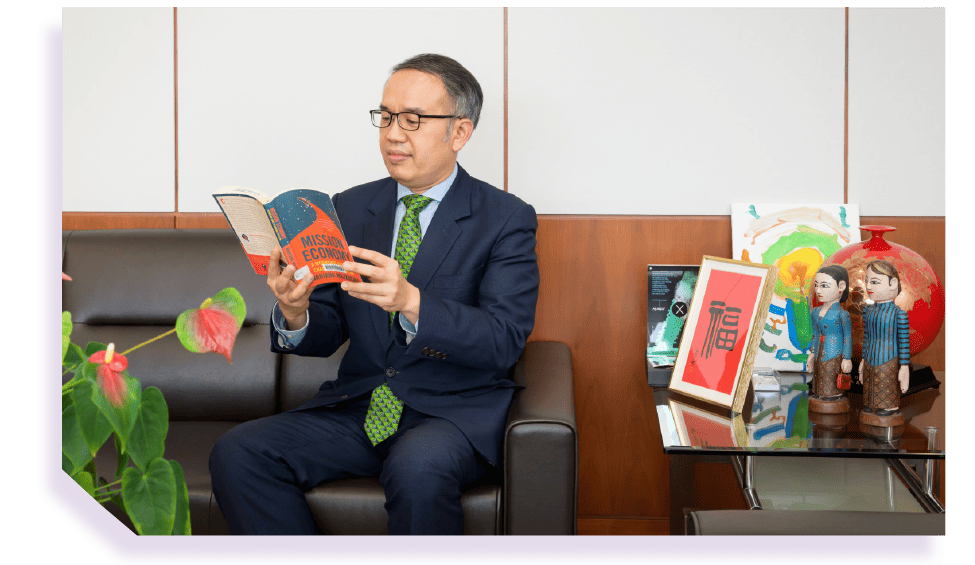
In the interview, Mr Hui recommended two books to civil service colleagues. One of the books is Mission Economy, which enables readers to rethink the role of Government. A Government should not only provide support when the market fails, but should also has a clear mission and make optimal use of public resources to engage market forces, thereby guiding the direction for development in a proactive manner. He said, “This is in line with the ‘result-oriented’ approach highlighted by the Chief Executive, and the governing team should not only respond to questions but should also actively shape the future.”
Another book is The Memories of Mei Ho House, which takes readers back to the old days of Hong Kong. It not only depicts the everyday life of the residents in the Shek Kip Mei public housing estate, but also reflects the development of Hong Kong over these years. Mr Hui is of the view that civil servants with a macro perspective can give their best in governance after gaining a better understanding of how our society has gradually developed into what it is now with the changes in time. These stories have reminded everyone that today’s outcomes which have been taken for granted are in fact the results of years of hard work and dedication across different generations.
Another book is The Memories of Mei Ho House, which takes readers back to the old days of Hong Kong. It not only depicts the everyday life of the residents in the Shek Kip Mei public housing estate, but also reflects the development of Hong Kong over these years. Mr Hui is of the view that civil servants with a macro perspective can give their best in governance after gaining a better understanding of how our society has gradually developed into what it is now with the changes in time. These stories have reminded everyone that today’s outcomes which have been taken for granted are in fact the results of years of hard work and dedication across different generations.