Housing Department
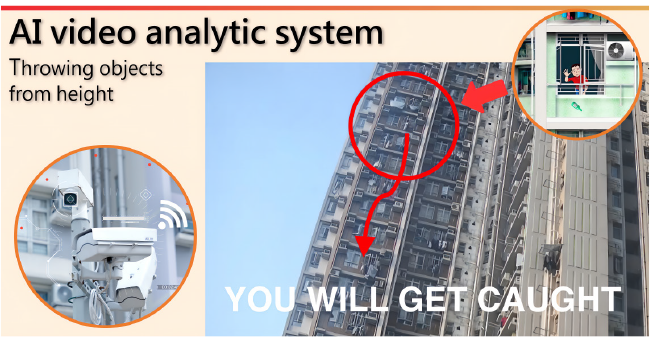
To combat the misdeeds of throwing objects from height, HKHA has installed “eyes in the sky” at lamp posts, rooftops, and façades of buildings near black spots of falling objects in public rental housing estates. These surveillance systems are equipped with high-definition digital cameras for 24-hour recording and are integrated with AI image analytic technology to assist in detecting throwing incidents.
In case of incidents of throwing objects from height, the AI video analytic system (the System) will accurately and efficiently identify the incidents from video footage, shortening the entire evidence collection process and sparing frontline staff of HD from reviewing video footage for long hours. Since the objects concerned tend to be small in size or have colours similar to those of the façades, it is often difficult to detect such incidents on the screen with the naked eye alone. In the past, even the manual video review process was usually several times longer than the video itself, instances of throwing objects from height that happened in seconds could still be missed. With the application of the AI image analytic technology by HKHA, it is now possible for the System to analyse the footage in about half the time of the video duration and generate a clip marked with a trajectory tracking the falling object and a circle highlighting the point of origin, enabling estate management teams to quickly and accurately pinpoint the suspected flat for follow-up.
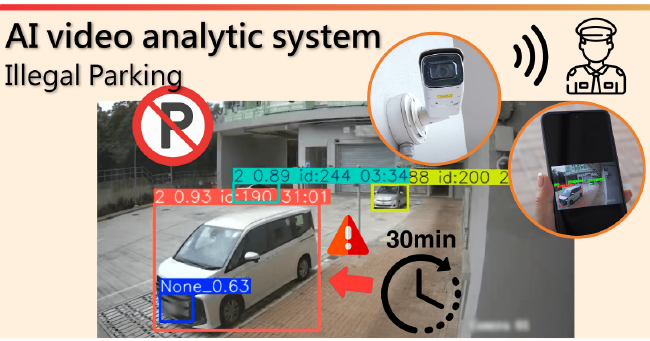
Apart from using AI image analytic technology to detect throwing objects from height, HKHA has also adopted the technology to monitor parking of vehicles, including motorcycles.
In the past, vehicle parking was monitored manually during estate patrols or by monitoring display screens. After AI image analytic technology being integrated with the mobile CCTV surveillance system, estate management staff can perform real-time monitoring and automatically track the parking durations of multiple vehicles simultaneously with a single camera. When the parking duration of a vehicle exceeds the preset time limit, the System will instantly issue an alert and display the image of the relevant vehicle on the screen, notifying estate management staff of follow-up actions such as dispersing the vehicle, issuing warnings, or even impounding the vehicle. The AI image analytic technology significantly improves the efficiency of monitoring illegal parking and helps reduce conflicts between estate management staff and offending drivers.
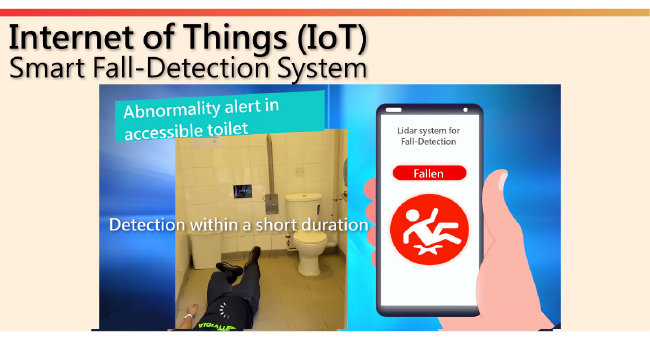
By installation of sensors, HKHA has established the smart fall-detection systems under an IoT early warning system in accessible toilets to detect incidents of falling, fainting, or prolonged inactivity involving users, and to send an alert to the property management personnel for provision of prompt assistance.
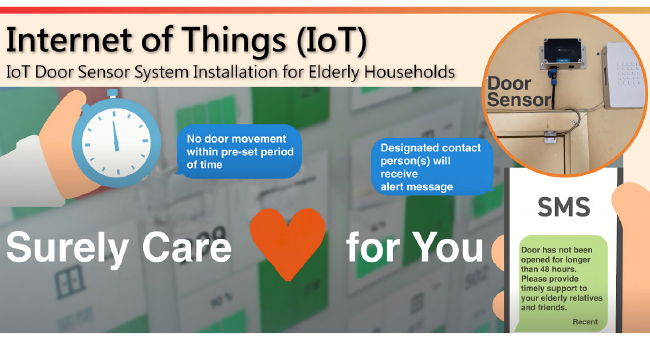
HKHA has also launched the pilot scheme of “IoT Door Sensor System Installation for Elderly Households” (the Scheme) since April 2025 in Wan Hon Estate in Kwun Tong and Sheung Lok Estate in Ho Man Tin, both of which are with a larger population of elderly residents. The elderly households who voluntarily participate in the Scheme are equipped with the system. If the door has not been opened for longer than the specified period, the system will send a Short Message Service reminder to the designated contact person(s) for rendering timely support for the elderly. This helps provide effective support for the underprivileged in the public housing estates.